

R/T 003 - From Clay to Dragons
This week's radical thing is: A history of skateboard wheels and the future of skateboarding innovation

This story of skateboard wheels shows that a long-dismissed area for innovation can still be fruitful, should we possess the right mindset. It also illustrates how success often relies on overlapping phenomena that create an environment for success if someone is set up to exploit it.
The story of the invention of the skateboard has been told many times. Little did those Kids know that removing the boxes from their 'skate crates' in the 1950s would catalyse a creative culture that continues to influence music, fashion, arts and design.
The earliest examples of the skateboard have a mixture of clay and steel wheels. Anyone who's ever ridden on a flat tire or steel wheel can empathise with the bone-juddering ride these innovators would have experienced. The danger level also gets ramped, as any collision with a small rock or uneven pavement would eject you onto the concrete.
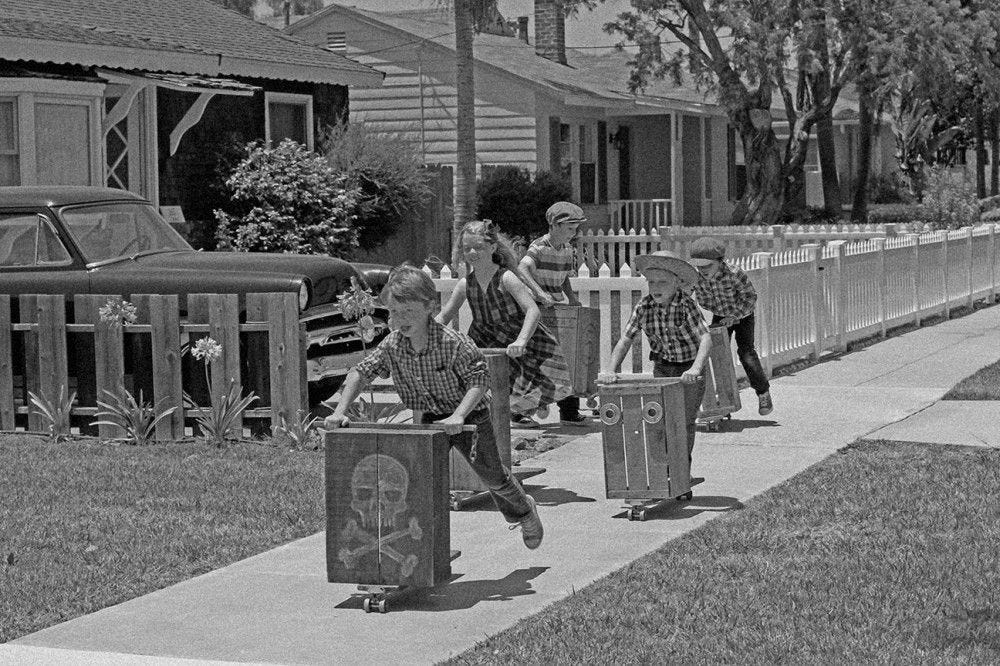
1950s kids on their steel-wheeled ‘Skate Crates’
The first significant innovation in wheel technology came in the 1970s with the advent of polyurethane. Frank Nasworthy, a Virginia Tech graduate, latched onto the idea of transferring roller skate wheels to skateboards after a visit to his father's friend's factory. He was enamoured with the idea he spent his life savings setting up a company - Cadillac wheels.
This innovation spurred the popularity of skateboarding and the first "craze".
The 70s saw softer wheels gain in popularity, with durometers (the measure of hardness) of around 78a. These provided more grip and a smoother ride. They were better suited to the cruising and carving of "sidewalk surfing" and skating pools and concrete parks.
The 80s saw experimentation in the size of wheels, with larger and thinner wheels finding favour with vert skaters who could increase their airtime and lock into coping. An example of this were Powell T-Bones, which were heading towards the 70mm range.
The early 1990s and the advent of technical street skating saw tiny wheels (lovingly referred to as bearing covers) reach the height of fashion. These harder, smaller variants enabled street skaters to more easily achieve new grinds and slides gaining popularity in the urban environment.
At their peak they reached a laughable size of the mid-thirty millimetres and grew increasingly unusable.
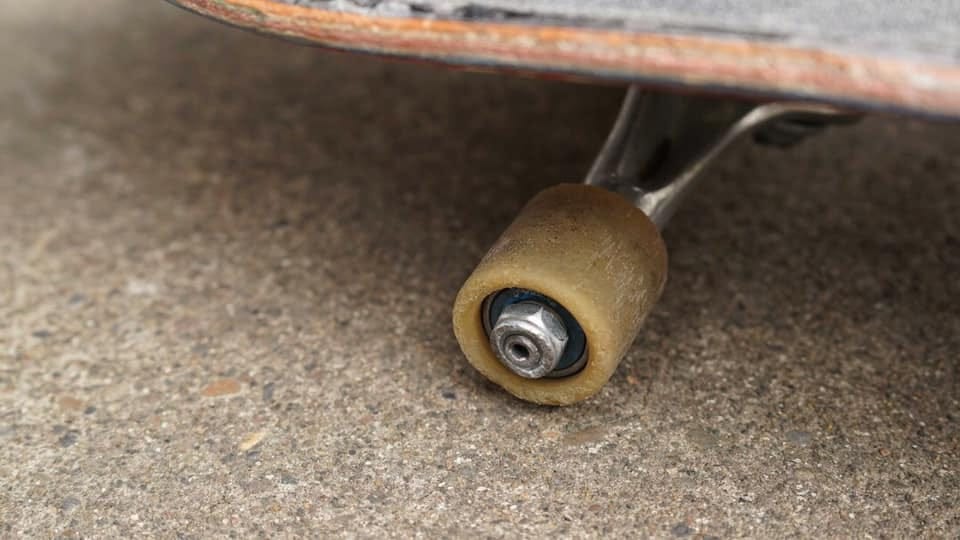
An example of some heavily worn “bearing covers” of around 36mm diameter from Reddit User Ultravalleysteeze
Although there were reactions to these trends (Philadelphia skaters were known for adopting bigger wheels to drive a powerful and fast skateboarding style in the rough, weather-affected environment of the east coast), the size of skateboard wheels stabilised in the late 90s and early 2000s. Now, many skaters ride a wheel size between 51 and 56mm, although some will push 60mm and upwards.
So why should you, dear reader, care about this?
Well, fast-forward to 2023, and a new skateboard wheel is on the scene - The Powell Dragon.
Dragons are notable for a new ‘Dragon Formula’ that combines a softer wheel's smooth ride and a hard wheel's slideability. This means you can skate more diverse terrain and connect the advantages of the urethane durometer spectrum. They were also the passion-project of George Powell - one half of the iconic skateboard company Powell Peralta - responsible for the Bone Brigade and discovery of Tony Hawk.
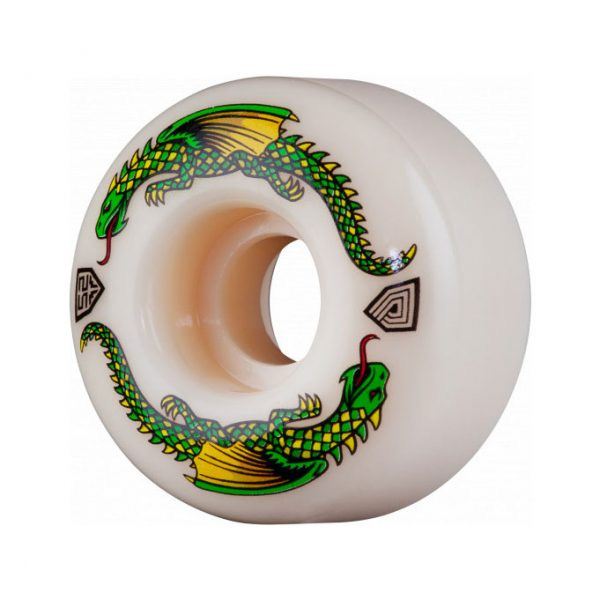
Powell Dragon Formula wheels - for the discerning Rad Dad
Why is this interesting for anyone outside of skateboarding?
Dragons are in high demand, even though they initially cost 20% more than the average set of wheels. They have found popularity in a particular demographic skateboarder - one that is sometimes jokingly referred to as the Rad Dad.
Rad Dads are skateboarders in their late 30s to mid-40s. These are either die-hard skate rats or skaters who stopped in their heyday and have had a resurgence of interest, potentially due to an offspring's excitement about skateboarding.
These skaters are less likely to be seen at new skateparks with the young guns but skating in rough car parks and painted curbs in their efforts to maximise the stoke and minimise the hospital visits. This culture is evolving in Instagram accounts such as Dadlands - a remix of the famous 90s UK skatepark - Radlands. Dadlands enables curb skaters to publish their curb footage to keep their skate dreams alive.
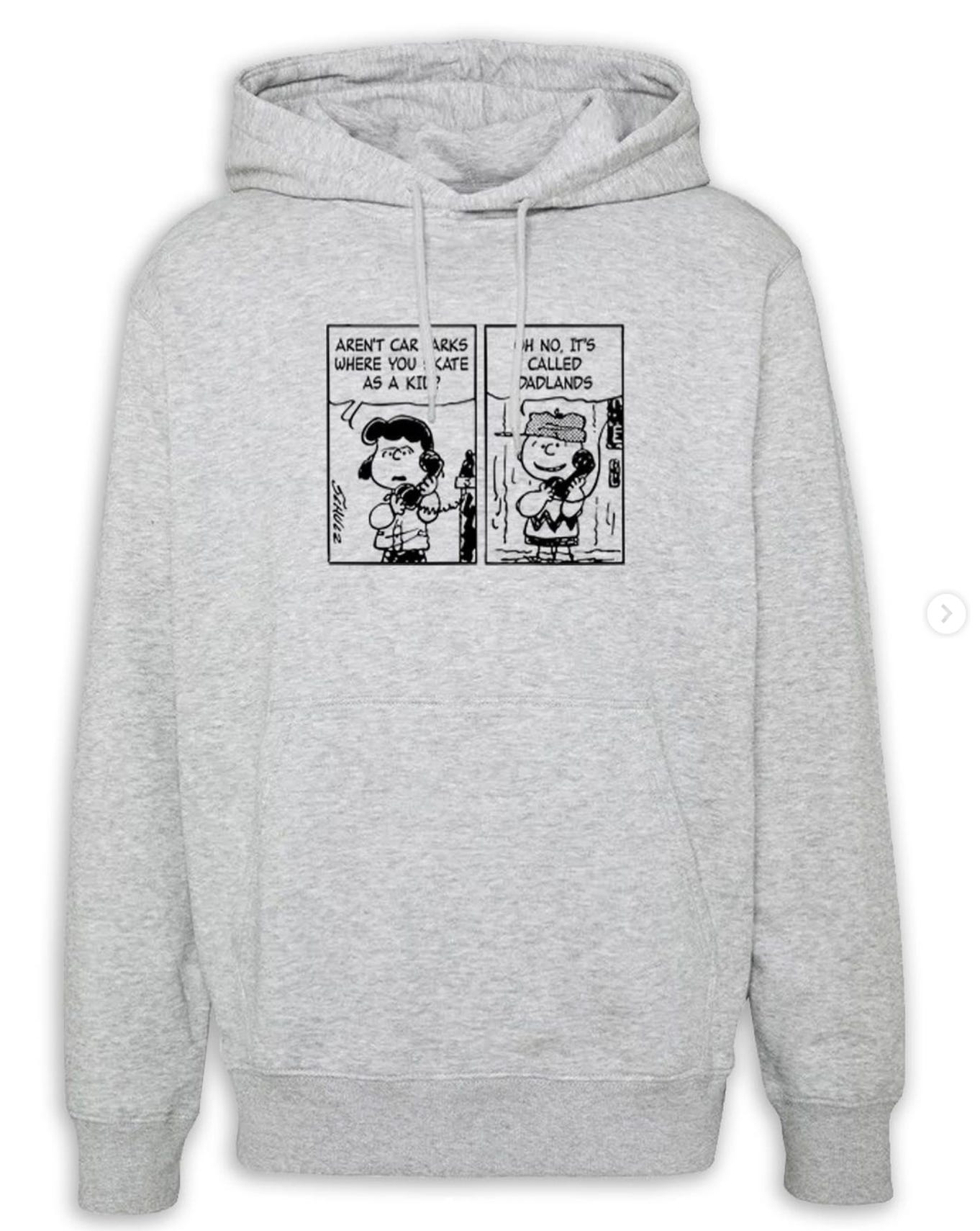
Dadlands also has a range of merch popular with its loyal followers.
These Rad Dads also indicate a broader trend of people in their middle age engaging in more adventurous activities. Unlike their parents, this demographic is more adventurous in later life. Maybe they're trying to hold on to get to their youth? With an increasingly ageing population, we're staying alive for longer, and we're also trying to remain younger for longer. This might also have something to do with how we perceive our age.
One of the most significant recent innovations in skateboarding is the increased diversity and inclusivity that is blossoming. In the 90s, when today's Rad Dads were in their youth, you would be hard-pressed to find a female skater in a crew, and there were only a handful at the professional level.
Nowadays, iconic skaters have come out, and there are gender-fluid skaters, trans skaters, and, thanks to the Olympics - a burgeoning female skate scene. In the future, we're set to see more Rad Dads, Mums, Parents and skaters that don't perceive age as an issue to be considered.
In this future, it remains to be seen who will innovate and how they will do it. Will there be new demographics and interest in skateboarding in 30 years? Will it still exist, or will it continue to evolve into something unrecognisable from how we see it today?
From clay and steel to slidey-grippy urethane, skateboard wheel technology has come a long way since its humble beginnings. Yet, as this story shows, the real innovation lies not just in the product itself but in the culture and community that surrounds it. As skateboarding continues to inspire and unite people from all walks of life, we can look forward to a future where everyone has a place on the board.
I got some Schmitt Stix Saw Blades wheels in the late 80s and suddenly could power slide. So much fun.
Then in the 2020s as a born again skater I hit a stone on small hard wheels and dislocated my finger. Not fun.
Dragons is the right wheel at the right time for the demographic you’ve captured so well in this piece.
This is great. Really hits on something that needs more exploration: products, technology and innovation as drivers of community and culture. Formation and evolution of group identity and how it evolves. Thanks for sharing something thought provoking.